
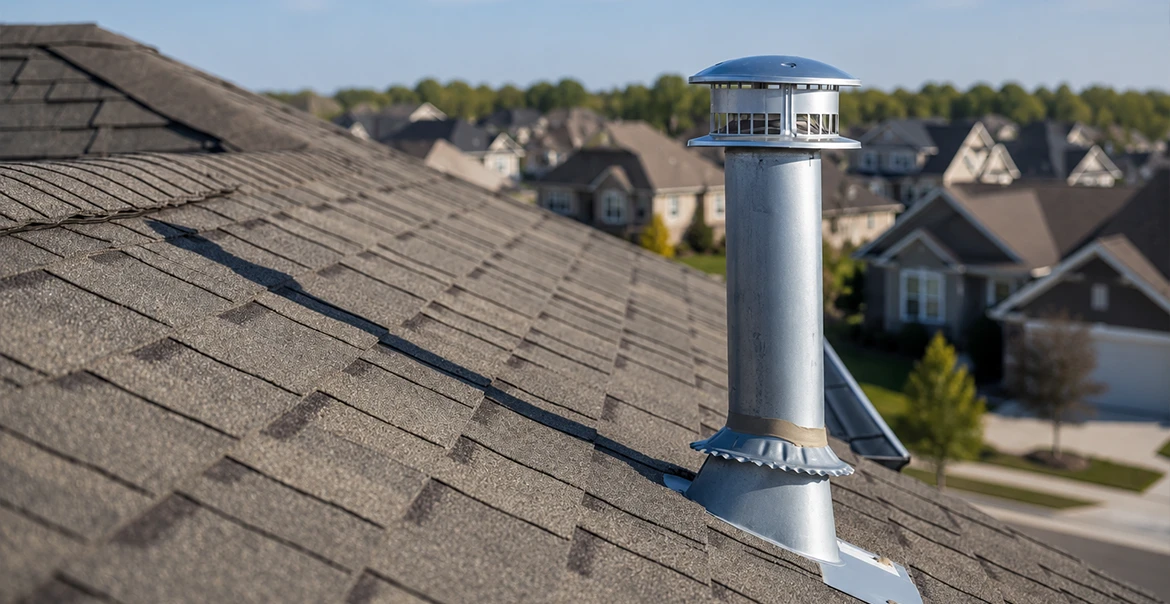
What Is a Furnace Flue Pipe?
Think of the furnace flue pipe as the exhaust system for your home's heating equipment. It attaches directly to the furnace exhaust port and runs from the heat exchanger to a termination point outside your home, carrying combustion byproducts, including carbon monoxide, carbon dioxide, nitrogen oxides, and water vapor, out of your home. It is the final link in your furnace's venting chain, and your entire HVAC system depends on it functioning correctly every time the furnace cycles on. Without it, those gases have no exit route.
How a Furnace Flue Pipe Works?
Every time your furnace ignites, it converts fuel into heat and simultaneously produces exhaust gases as a natural result of combustion. Those gases travel from the heat exchanger into the flue pipe, which routes them out of the home through a wall or rooftop vent. The exact mechanism depends on your furnace type. Older natural draft systems use the buoyancy of rising hot gases to create flow. Induced draft furnaces pull gases through using a small motor called a combustion air inducer. Condensing, or high-efficiency systems, use sealed combustion and push cooler exhaust out mechanically. In every case, the flue pipe must slope upward at least a quarter inch per linear foot, moving away from the furnace toward the exit point, to keep airflow and condensate drainage moving in the right direction.
Types of Furnace Flue Pipes
Single-Wall Flue Pipe
Single-wall galvanized steel is the most straightforward pipe option available and generally the most affordable. It is only used for standard-efficiency furnaces operating at 80% AFUE or below, which is the percent of heat produced for every dollar of fuel consumed. Because the outer surface of the pipe gets hot during operation, any combustible material must be kept a minimum of 6 inches away. This type works well for short runs where clearance requirements can be met without difficulty.
Double-Wall (B-Vent) Pipe
B-vent takes a different approach by sandwiching an insulating air pocket between an aluminum inner layer and the galvanized steel outer layer. That gap keeps the exterior surface substantially cooler, which brings clearance requirements down to roughly 1 inch from combustible materials. This makes B-vent the preferred choice for mid-efficiency furnaces in the 80% to 89% AFUE range, especially in installations that pass through walls or travel vertically.
PVC Vent Pipe
Once a furnace crosses the 90% AFUE threshold, the physics of the exhaust change. High-efficiency condensing furnaces produce exhaust that stays between 100° and 150° F, far too cool to require metal piping. Because the exhaust contains water vapor that condenses into liquid, it can corrode metal venting over time. PVC or CPVC vent pipe handles these conditions well, resists moisture, and can run straight out through an exterior wall rather than climbing vertically up through the roof.
Why Is a Furnace Flue Pipe Important?
Prevents Carbon Monoxide Buildup
Carbon monoxide (CO), a poisonous gas caused by the incomplete combustion of fuels, is one of the most serious hazards in any home with a fuel-burning appliance. Because CO has no smell and no color, there is no way to detect it without a working alarm, making your furnace flue pipe the first line of defense between your family and that risk.
Protects Indoor Air Quality
Combustion gases are not just dangerous in large concentrations. Even low-level exposure over time can affect the air quality inside your home. A properly sealed, well-maintained flue pipe keeps those byproducts moving in one direction: out. That translates to cleaner air, better system performance, and fewer surprises down the road.
Required for Safe HVAC Operation
A fuel-burning furnace cannot do its job safely without a functioning venting system. The flue pipe is not optional equipment. It is a core part of how your furnace operates, and a failure anywhere along that pathway puts the entire system at risk. Without proper venting, exhaust has nowhere to go, which creates pressure issues, backdrafting, and potential CO infiltration into your living spaces.
Compliance with Safety Standards
Local building codes and furnace manufacturer specifications both require proper flue pipe installation and maintenance. These requirements exist for good reason and are checked during HVAC installations and home inspections. The EPA recommends that a licensed professional inspect all fuel-burning appliances, including furnace flue pipes and chimney connections, before each heating season to confirm everything meets current safety standards.
Furnace Flue Pipe vs. Chimney
While a furnace flue pipe and a chimney both handle the job of routing gases out of your home, they are built differently, installed differently, and serve distinct purposes. A furnace flue pipe is a dedicated metal or PVC pipe that connects directly to your furnace and carries combustion exhaust to an exterior vent, typically through a wall or up through the roof. It is sized and specified to match your furnace's output and venting requirements. A chimney, on the other hand, is a structural component, most often masonry or prefabricated metal, that provides a vertical pathway for smoke and gases from a fireplace or wood stove.
Chimneys are built into the home's architecture, while flue pipes are installed as part of an HVAC system. That being said, some HVAC systems and water heaters can utilize old fireplaces and their chimneys as a path to run the flue through and out the home. Though they can share some overlap in multi-appliance setups, each serves its own system and should be inspected and maintained independently.
Common Problems with Furnace Flue Pipes
Blockages: Bird nests, accumulated debris, ice buildup, and snow packing around the termination cap are the most frequent culprits. Even a partial blockage restricts the airflow your system needs to vent properly and creates conditions for your system to shut off.
Corrosion and Rust: Single-wall galvanized pipe typically holds up for 10 to 15 years before moisture exposure begins to take its toll. Once corrosion sets in, small openings form that allow exhaust to escape before it reaches the exterior vent.
Loose or Separated Joints: Heat expansion, vibration, and aging all work against the integrity of pipe connections over time. The EPA has identified disconnected flue sections as a common source of residential CO exposure. A gap as small as a sixteenth of an inch at a joint is enough to let gas into the home.
Venting That Does Not Meet Code: Wrong pipe diameter, insufficient slope, or clearances that do not meet specifications all result in poor draft and potential backdrafting regardless of how well the furnace itself functions.
Signs of a Damaged or Unsafe Flue Pipe
Watch for these indicators that something is wrong with your venting system:
Unfamiliar smells or fumes near the furnace
Rust stains, visible holes, or sections that have pulled apart
The furnace short cycling before heating cycles complete
A CO detector going off anywhere in the home
Do not wait on any of these. If your CO alarm activates, leave immediately, call 911, and then reach out to a licensed HVAC technician once your household is safe. The EPA also notes that symptoms like persistent headaches, nausea, or dizziness that improve once you leave the home can point to low-level CO exposure from a compromised vent.
Furnace Flue Pipe Maintenance Tips
Schedule Annual Inspections
Neither the EPA nor the CPSC leaves any ambiguity here: fuel-burning appliances should get a professional inspection before every heating season. Booking a full furnace tune-up that includes flue pipe evaluation at the same time is the most practical way to stay on track.
Clean Blockages and Check Connections
Between professional visits, walk the visible sections of your flue pipe and look for rust, cracks, or joints that have shifted. Check the exterior termination point for debris or ice, especially after winter weather. Test your CO detectors monthly.
Leave Repairs to the Professionals
Flue pipe work is subject to local code requirements and manufacturer specifications. Any repair or modification needs to be done by a licensed HVAC technician, not treated as a weekend project.
When to Repair or Replace a Flue Pipe?
Severe corrosion, holes, or any point where exhaust is confirmed to be leaking all require immediate replacement, not patching. A component this central to household safety is not worth a temporary fix. Flue pipes on systems that are 15 to 20 years old should be evaluated even when no visible damage is present, since internal deterioration often does not show on the outside. If you are already replacing an older furnace, swapping the flue pipe at the same time can be the right call. Any installation that was not done to code at the outset also should be corrected before the system runs another season.
FAQs
Is a flue pipe required for all furnaces?
For the majority of furnaces, yes, but it depends on how the furnace generates heat. Gas, propane, and oil furnaces all produce combustion byproducts as part of normal operation, and a flue pipe is the only way those gases get safely out of the home. Electric furnaces generate heat through resistance coils rather than combustion, so there are no exhaust gases to deal with and no flue pipe needed.
How often should a flue pipe be inspected?
Once per year is the baseline, and before the heating season is the right window to do it. Catching a cracked section or a loose joint before the system is running around the clock gives you time to address it without pressure. Rolling it into a scheduled furnace tune-up is the most efficient approach since a technician is already evaluating the system.
Can a flue pipe leak carbon monoxide?
Yes. Corrosion, joints that have shifted over time, and blockages that force gases to backtrack can all create pathways for CO to enter the home. A detector on every level of your home gives you an early warning system, but it is not a substitute for getting the venting physically inspected by a professional.
What type of pipe is used for high-efficiency furnaces?
High-efficiency condensing furnaces cool exhaust gases down considerably before they exit the system, typically to somewhere between 100 and 150 degrees F. At those temperatures, PVC or CPVC vent pipe is the correct material. Metal pipe is not only unnecessary at that heat range, but it can actually corrode faster due to the acidic condensate and water vapor produced by high-efficiency systems. These setups also frequently vent horizontally through an exterior wall or terminate through the roof.
Conclusion
The furnace flue pipe does not get much attention until it fails, and by then, the consequences can be serious. Knowing what type of pipe your system uses, what deterioration looks like, and how often the system needs professional eyes on it puts you in a much stronger position as a homeowner. Find a Lennox dealer near you to schedule a furnace flue pipe inspection or a full system tune-up before heating season.
We’re here to help make home comfort solutions a little clearer and a lot less stressful.
No Worries. It’s a Lennox.