
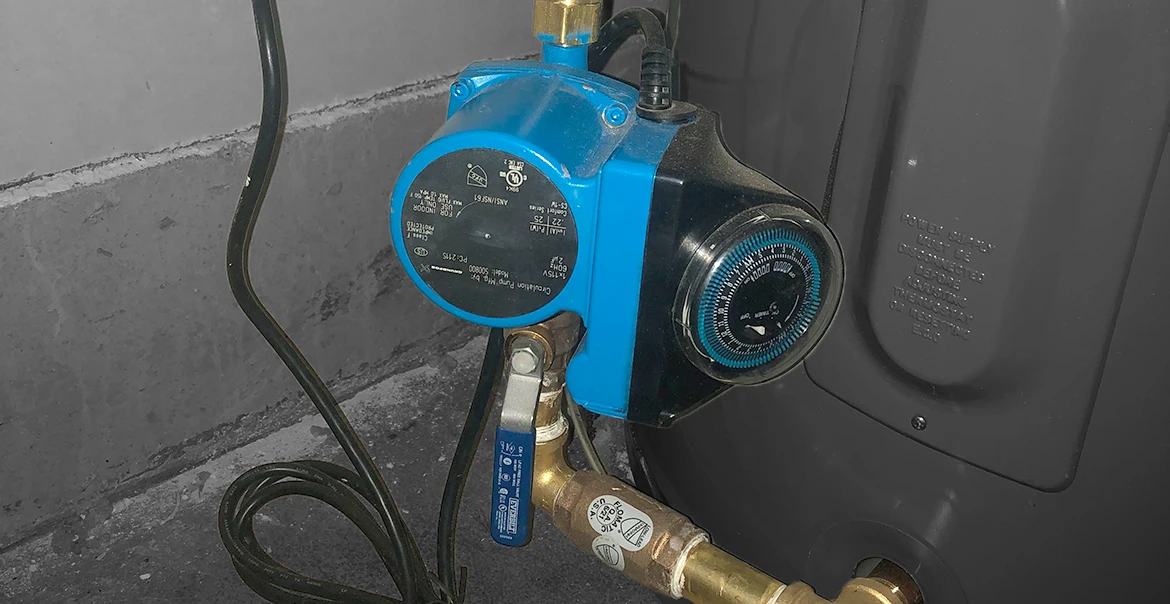
A boiler heats water to a high temperature and then distributes that water throughout your living space, via radiators or underfloor heating systems, before bringing the water back to the boiler to start the cycle anew. The boiler’s circulator pump is what makes that distribution of water possible.
Because this pump generally operates out of sight, it is easy to overlook until your comfort changes. Knowing what it does and how trouble may show up can help you respond before a circulation issue disrupts your heating.
What Is a Boiler Circulator Pump?
A boiler circulator pump is an electrically powered device that drives water through a hydronic heating system. You may also hear it called a circulating boiler pump. It serves as the connection between the heat created inside the boiler and the rooms that need that heat. Without a working pump, hot water may remain near the boiler instead of reaching the radiators, baseboard units, or tubing installed beneath the floor that keeps your home heated.
Several parts work together inside the pump:
Motor: Powers the pump’s movement.
Impeller: Rotates to propel water through the system.
Housing: Directs water along the intended path.
Controls: Tell the pump when and how to operate.
Reliable circulation supports balanced temperatures and helps the boiler complete each heating cycle properly.
How a Boiler Circulator Pump Works?
The process starts when the thermostat detects that your home needs heat. The boiler prepares hot water, and the circulator pump begins moving it into the supply piping. The water travels to the home’s heat emitters, where its warmth transfers into the surrounding space.
After releasing some of its heat, the cooler water travels through the return piping and enters the boiler again. This ‘circulation loop’ can be summarized as:
Boiler → supply piping → radiators, baseboards, or radiant flooring → return piping → boiler
The pump’s impeller provides the force needed to maintain that flow. Depending on the system, the pump may activate only during a call for heat or run continuously during the heating season.
Types of Boiler Circulator Pumps
Circulator pumps are available in several designs. The right option for your home depends on factors such as piping arrangement, system demand, and available installation space.
Single-speed pumps: Deliver one set flow rate whenever they run. This straightforward design is frequently found in older systems.
Variable-speed pumps: Adjust water movement to match changing heating requirements, which may improve temperature consistency and reduce operating noise.
Circulator pumps are typically available with standard motors or Electronically Commutated Motors (ECM). A standard motor pump relies on conventional motor technology and commonly operates at a fixed output, while ECM motor pumps adjust flow based on current demand by managing electrical use more efficiently.
Variable-speed and ECM are not two names for the same feature. Variable-speed refers to the pump’s ability to change its operating rate. ECM identifies the technology used in the motor. A pump can include both characteristics.
Pumps also differ by connection style. Inline models sit directly within the piping, making them useful in tighter locations. Flanged models use bolted connections and may be selected for larger or more involved system layouts.
Signs of a Faulty Boiler Circulator Pump
Changes in heating performance often provide the first clue that circulation is not working correctly. Contact a professional if you notice any of the following symptoms:
The pump does not turn on
The pump starts and stops unexpectedly
The motor appears to run without moving enough water
One or more radiators stay cold
Certain rooms take much longer to warm
Grinding, buzzing, humming, or rattling comes from the pump
Water or corrosion appears near the housing or fittings
The pump continues running when there is no apparent call for heat
The boiler overheats or shuts down repeatedly
Heating energy use increases without an obvious explanation
The sound a pump makes can offer useful context. Grinding may be associated with worn internal parts, while humming can occur when the motor is under strain. Water near the pump should also be addressed quickly because moisture can affect adjacent electrical components.
Common Causes of Boiler Circulator Pump Problems
A circulation problem does not always mean the entire pump has failed. Several conditions can interfere with its performance.
Air inside the loop: Trapped air can interrupt water movement and prevent some heating zones from warming.
Electrical trouble: Wiring, controls, power supply issues, or a damaged motor may keep the pump from starting normally.
Restricted piping: Scale, sediment, or other buildup can narrow the path available for water.
Aging internal parts: Bearings, seals, and impellers can lose effectiveness after extended use.
Incorrect installation: A poorly positioned or improperly sized pump may struggle to deliver the required flow.
Unbalanced zones: Water may favor one part of the system, leaving other areas with insufficient heat.
A qualified technician should identify the source of the problem before recommending replacement. Installing another pump will not resolve restricted piping, trapped air, or an underlying system balance issue.
When Warning Signs Mean It Is Time to Call a Professional?
Schedule service if the pump will not start, operates inconsistently, becomes unusually loud, or fails to circulate heat throughout the home. Recurring boiler shutdowns and repeated problems in an older system also deserve a complete evaluation.
A qualified technician can inspect the electrical supply, test pump operation, look for air or other obstructions, and measure how water moves through each zone. If replacing the boiler circulator pump is appropriate, the technician can choose equipment that fits the boiler and the home’s piping configuration.
Boiler circulator replacement cost can vary according to the pump design, accessibility, system layout, and any additional balancing work required. In an aging system with frequent repairs, the technician may also help you compare continued service with boiler replacement.
Why Circulator Pump Issues Need Professional Attention?
Circulator pump service involves both electricity and pressurized water. The work may require isolating or draining part of the system, opening electrical connections, installing new components, restoring pressure, and checking the completed heating loop.
Pump selection is equally important. A model that produces too much or too little flow can affect comfort and equipment operation. Professional installation helps confirm that the pump, controls, boiler, and heating zones function together as a complete system.
Tips to Maintain a Boiler Circulator Pump
A few practical habits can help you spot changes before they become larger heating problems:
Arrange a professional boiler inspection before the heating season.
Compare how quickly different rooms and radiators warm.
Stay alert when new noises appear instead of waiting for pump failure.
Check the surrounding area for dampness, staining, or corrosion.
Follow the maintenance schedule provided by the equipment manufacturer.
Keep Warmth Moving Through Your Home
The circulator pump may be a small part of your boiler system, but it has a major influence on how comfortably and consistently your home heats. If rooms stay cold, the pump becomes noisy, water appears around its connections, or the boiler keeps shutting down, have the system checked before the issue progresses.
Connect with a qualified Lennox dealer to schedule an inspection and keep your home’s heating system operating as intended.
We’re here to help make home comfort solutions a little clearer and a lot less stressful.
No Worries. It’s a Lennox.™
