
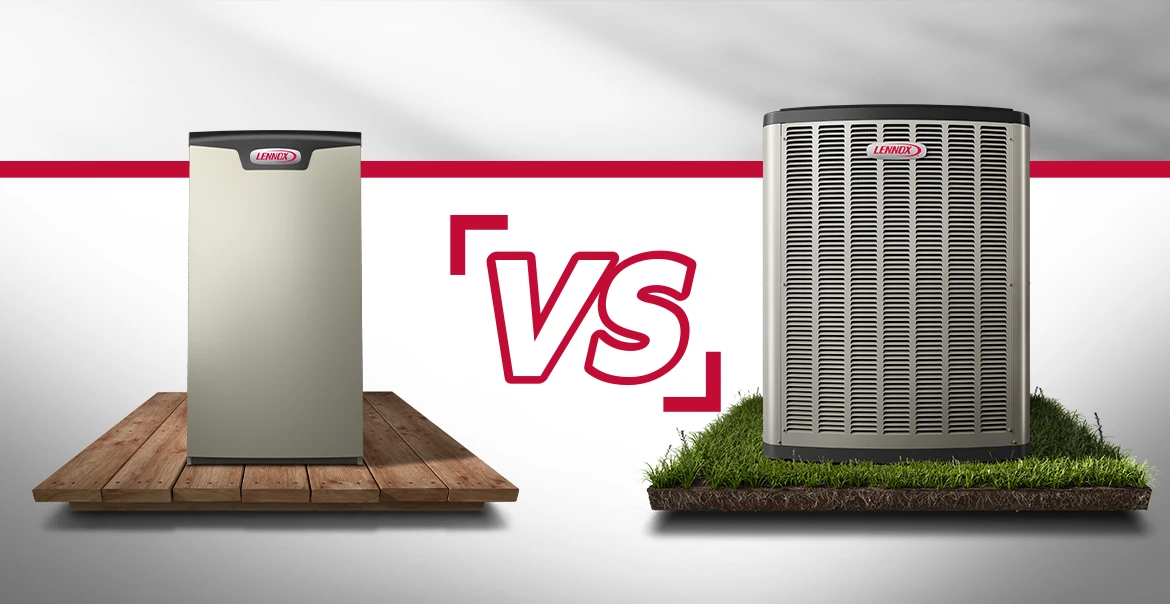
Understanding Forced Air Systems
Think of a forced air system as your home's all-in-one comfort engine. While "forced air" is most commonly associated with heating, what really defines it is the delivery method: conditioned air, warm or cool, distributed throughout the home through a shared duct system. A smart home thermostat ties it all together, giving you precise, room-by-room control over how your home feels every day.
What makes forced air systems especially popular in residential settings is their flexibility. They handle both heating and cooling through a single duct system, and they can be paired with add-ons like humidifiers, advanced air filtration systems, and electronic air cleaners. They also support a range of energy sources, including gas, electric, and dual-fuel configurations.
Exploring Central Air Conditioning Systems
Central air conditioning is built around one mission: whole-home cooling. A central air system consists of an outdoor condensing unit, an indoor evaporator coil, indoor blower, and a series of ducts.
The cooling process works by removing heat from the air inside your home. As warm air moves across the indoor coil, refrigerant absorbs that heat and carries it outside. The heat is then released through the outdoor unit, while the cooled air is circulated back through your ductwork to provide consistent comfort from room to room. Smart thermostats manage the entire process, and advanced units may include innovations like variable speed compressors that allow the system to fine-tune temperature control while using less energy.
Central air provides steady, uniform cooling without the visual clutter of window units. Because it operates quietly and out of sight, it preserves your home's aesthetic while keeping every living space comfortable.
Can Forced Air and Central Air Work Together?
In many homes, the answer is yes, but not because they are two separate systems working side by side. Instead, forced air describes how heated or cooled air is distributed throughout the home, while central air refers to the cooling equipment that produces that cooled air. In most homes with central air conditioning, the system relies on a forced-air distribution system to circulate conditioned air through the ductwork.
This is one of the reasons the forced air versus central air conversation can feel confusing. It’s not an apples-to-apples comparison. In practice, millions of homeowners already have both.
What Are the Key Differences Between Forced Air and Central Air Systems?
1. Installation
Installing a forced air system typically requires a more comprehensive ductwork setup, as it needs to support both heating and cooling. That said, forced air can also work with existing ductwork in some homes. Central air systems, on the other hand, can often integrate into a home's existing duct layout with minimal modifications, which can simplify installation in certain cases.
2. Energy Efficiency
Central air systems tend to perform whole-home cooling with higher energy efficiency, but advances in SEER (Seasonal Energy Efficiency Ratio) as well as HSPF2 (Heating Seasonal Performance Factor 2) ratings help both systems run more economically, contributing to lower utility bills over time. Ultimately, the quality of your HVAC units and how they are installed will affect your overall efficiency the most.
3. Indoor Air Quality and Comfort
Both systems support indoor air quality improvements. Forced air systems are well-suited for enhanced filtration options, including electronic air cleaners and whole-home humidifiers. Central air systems can be equipped with UV light technology to reduce the spread of microorganisms, keeping your air cleaner and healthier.
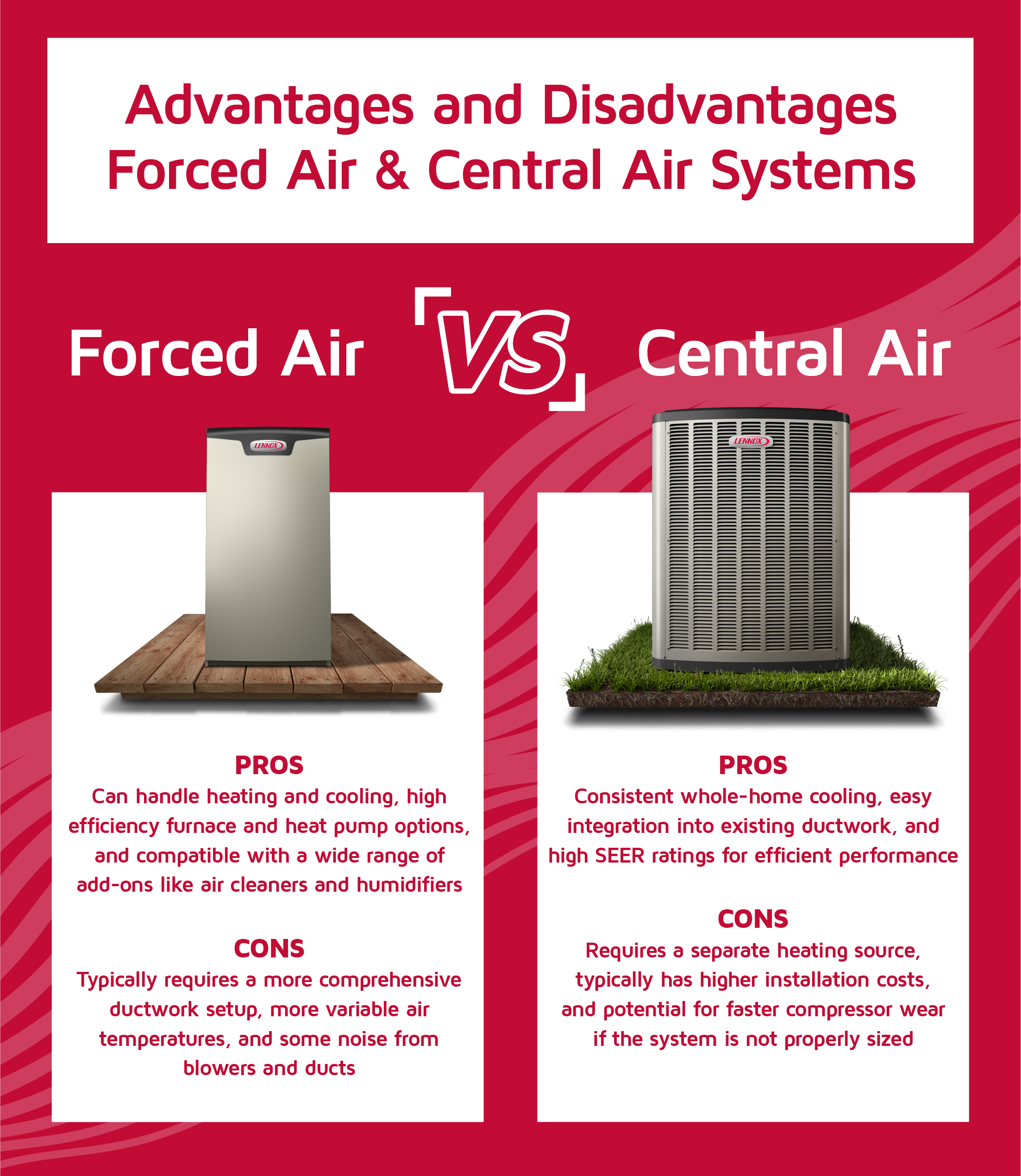
Advantages and Disadvantages of Both Systems
Forced Air
Pros: Can handle heating and cooling, high efficiency furnace and heat pump options, and compatible with a wide range of add-ons like air cleaners and humidifiers
Cons: Typically requires a more comprehensive ductwork setup, more variable air temperatures, and some noise from blowers and ducts
Central Air
Pros: Consistent whole-home cooling, easy integration into existing ductwork, and high SEER ratings for efficient performance
Cons: Requires a separate heating source, typically has higher installation costs, and potential for faster compressor wear if the system is not properly sized
Cost Considerations
How much you spend on either system depends less on which type you choose and more on what your home already has. If you have existing ductwork, a forced air furnace can often connect to it with minimal additional work. A central air unit can do the same. But if your home lacks ductwork entirely, installation costs for either system will be considerably higher, regardless of which direction you go. A qualified Lennox dealer can walk you through the options that make the most sense for your home's existing setup and long-term comfort goals.
How Do You Make the Right Choice for Your Home?
No two homes are the same, and that is exactly why the right HVAC decision starts with understanding your specific situation. Here are the key factors to weigh:
Home size and layout: Larger or multi-story homes tend to favor forced air systems, since a single duct network can distribute both heated and cooled air to every level. Central air handles cooling effectively regardless of home size, but it will still need a separate heating source to cover the whole home.
Existing ductwork: If your home already has a duct system in good condition, upgrading or adding to it is generally more cost-effective
Climate: Homes in year-round warm climates may prioritize central air, while homes in cooler regions benefit most from a strong forced air heating setup
Comfort priorities: Think about humidity control, air filtration needs, and how much temperature consistency matters to your household
A professional evaluation is the most reliable way to size the system correctly. Your installer will assess your home's layout, insulation quality, electrical capacity, and existing infrastructure to recommend the best path forward. Lennox systems offer versatile solutions for a wide range of home requirements, and a qualified Lennox dealer can help you weigh your options with confidence.
Maintenance Tips for Optimal Performance
Whichever system you choose, consistent maintenance keeps it running at its best.
Replace air filters regularly: Fresh filters maintain optimal airflow and efficiency, especially during peak usage seasons
Schedule annual HVAC inspections: A Lennox dealer can inspect belts, lubricate moving components, check refrigerant levels, and seal ductwork to prevent energy loss
Keep vents clean and unobstructed: Move furniture and carpets away from vents and vacuum them occasionally to prevent dust buildup and maintain steady airflow
Let’s Make the Right Call
Whatever direction you go, Lennox has whole-home comfort solutions built to perform. We know that buying an HVAC system is a big decision. With so many choices and opinions, it is easy to feel overwhelmed. Lennox takes away the stress and uncertainty with reliable, high-quality systems built to provide years of efficient, worry-free performance. Enjoy the comfortable feeling that comes from knowing you chose right. Because you don't pick a Lennox and hope it lasts. You choose Lennox knowing it's made to.
We’re here to help make home comfort solutions a little clearer and a lot less stressful.
No Worries. It’s a Lennox.™