
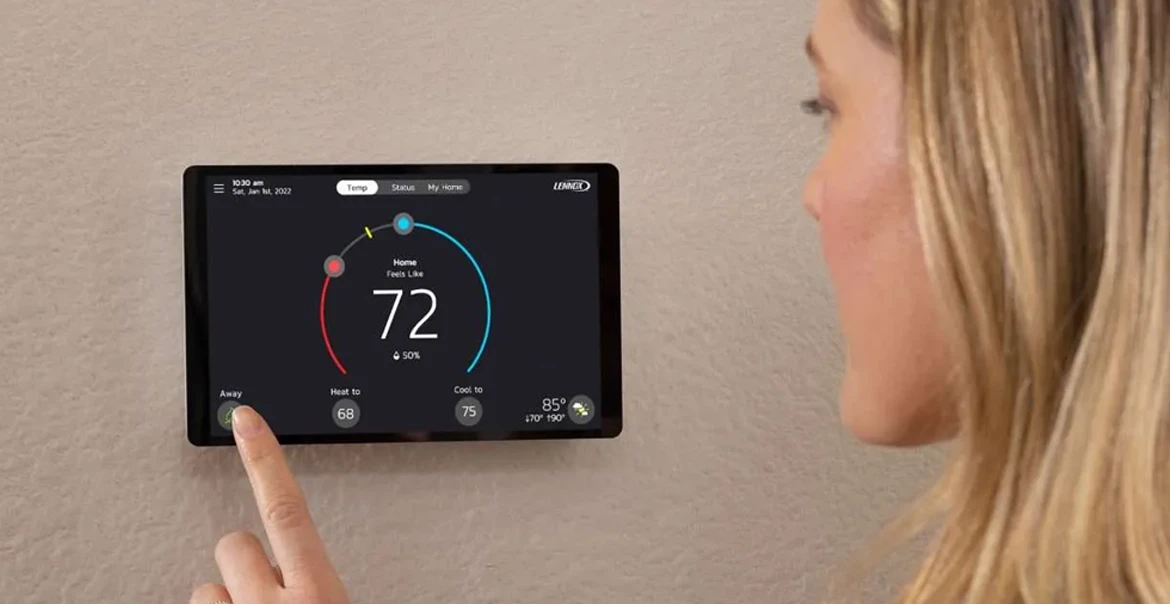
Your thermostat does more than display numbers. It tells your entire HVAC system how hard to work, when to kick on, and when to rest.
A properly placed thermostat measures the actual temperature in your living space and responds accurately, keeping your home comfortable without your system working overtime. Get the location wrong, and you could be heating an empty hallway or cooling air that's already coming through a nearby vent.
Why Is Proper Thermostat Location Important for HVAC Performance?
Think of your thermostat as the brain of your home comfort system. It senses the air around it and tells your HVAC system what to do based on that reading. If it is sensing air that doesn’t reflect the correct home temperature, everything downstream gets thrown off.
How thermostat placement affects system efficiency
When your thermostat is positioned in a spot with steady, representative airflow, it can make smart, accurate calls about when to heat or cool. That keeps your system running in balanced, efficient cycles instead of constantly switching on and off. A system that runs more smoothly experiences less wear over time, which means fewer repairs and a longer lifespan overall.
Here is a clear example of what poor placement can cost you: a thermostat near a drafty exterior door will sense cold air and signal your furnace to run, even if the rest of the house is perfectly warm. Your system works harder, your energy bill climbs, and your comfort suffers.
Impact of thermostat location on accurate temperature readings
Accurate readings are everything. A smart home thermostat placed in the right spot captures a true average of your home's temperature and responds to it. Poor placement near heat sources, in isolated rooms, or in areas with minimal circulation can lead to misleading readings that push your system to heat or cool spaces unnecessarily. That translates directly to higher energy consumption and uneven comfort.
How proper placement supports balanced heating and cooling performance
Consistent temperatures throughout your home depend on where your thermostat sits. Central placement, away from rooms with closed doors or stagnant corners, gives your system an accurate picture of what is happening across your whole home. For multi-level homes, placement matters even more since heat naturally rises and temperatures can vary significantly between floors.
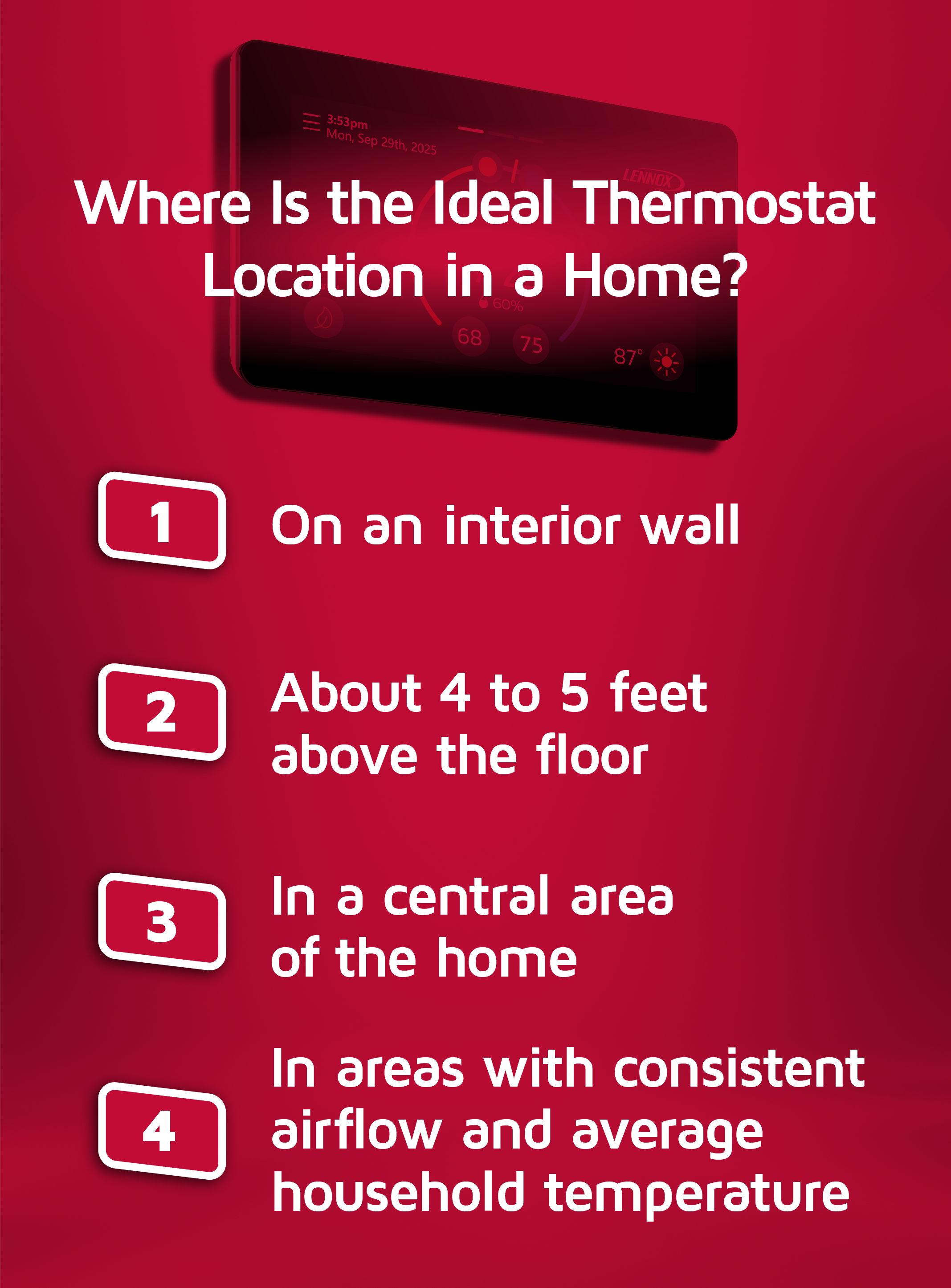
Where Is the Ideal Thermostat Location in a Home?
On an interior wall
Interior walls are shielded from outdoor temperature swings, drafts, and direct sun exposure. That stability makes them the most reliable surface for accurate readings. Avoid walls shared with garages or unconditioned storage areas, where outside temperatures bleed through and skew the data your thermostat is working with.
About 4 to 5 feet above the floor
This height sits right at average head level, which is exactly where the air you are actually breathing and feeling lives. Too close to the ceiling, and your thermostat picks up rising warm air. Too close to the floor, and it catches cooler air that does not reflect the rest of the room. Mounting at 4 to 5 feet keeps the reading representative and the controls accessible.
In a central area of the home
A central location lets your thermostat sense conditions throughout the whole house, not just one corner. Hallways and common living areas in the middle of the home are often good candidates, provided they have adequate airflow. For homes with multiple floors, separate thermostat placements for each level can help manage the natural temperature differences that come with elevation.
In areas with consistent airflow and average household temperature
Frequently traveled spaces with steady air movement give your thermostat the best possible read on what is happening in your home. Stagnant nooks, isolated rooms, or tight corners do not reflect real ambient conditions and should be avoided.
Where Should You Avoid Placing a Thermostat?
Certain spots in your home will reliably produce bad readings. Keep your thermostat away from:
Near windows or exterior doors. Every time that door swings open or cold air seeps through a drafty window frame, your thermostat registers a temperature drop that has nothing to do with the rest of your home. Your heating system kicks on in response, runs longer than it needs to, and stops only after the draft has passed. The result is a cycle of wasted energy and inconsistent warmth.
Close to air vents or return registers. Positioning a thermostat directly in the path of conditioned air is one of the most common placement mistakes. The moment your system pushes cool or warm air through that vent, your thermostat reads it and signals the system to shut off, even if the rest of the house has not yet reached the right temperature. Your home ends up under-conditioned, and the system never completes a full, effective cycle.
In direct sunlight. Sunlight streaming through a window can raise the surface temperature around your thermostat well above the actual room temperature. When that happens, your cooling system reads artificial warmth and runs longer and harder than necessary, while the shaded areas of your home remain unaffected and potentially too cool. Shade and consistent ambient light are what your thermostat needs to do its job accurately.
Near kitchens or heat-producing appliances. Ovens, stovetops, toasters, and even coffee makers release bursts of heat that can spike the temperature around a nearby thermostat. That spike signals your system to cool down a space that was never actually warm to begin with. The kitchen gets the air it does not need, the rest of the house may not get enough, and your HVAC system runs inefficient, misdirected cycles all day long.
In hallways with poor airflow. A hallway that dead-ends or gets minimal foot traffic tends to trap stagnant air that does not accurately reflect your home's true ambient temperature. Your thermostat reads that pocket of air, calls for heating or cooling based on it, and misses the mark for the rooms where you actually spend your time. Airflow matters just as much as location.
Near lamps, televisions, or electronics. Electronics generate steady, low-level heat that builds up around them over time. A thermostat mounted near a floor lamp or behind a television will pick up that warmth and interpret it as the room getting hotter than it really is. Your cooling system responds, runs unnecessarily, and quietly drives up your energy bill without you ever knowing why.
What Are the Signs Your Thermostat Is in the Wrong Location?
Your home will tell you when something is off. Watch for these signals:
Some rooms feel warmer or cooler than others. Uneven temperatures, like hot upstairs areas or cold rooms downstairs, are a classic indicator of ineffective temperature regulation
Your HVAC system turns on and off frequently. This short cycling puts extra wear on the system and signals your thermostat may not be reading conditions accurately
The thermostat reading does not match how the home actually feels. If the thermostat shows a wildly different temperature than how it feels, placement is likely the culprit
Energy bills increase without any changes in usage. Unexplained spikes often trace back to a system working harder than it should because its thermostat is poorly positioned
If you are noticing any of these signs, relocation is worth considering. Any move should be handled by a professional to make sure the wiring and placement are done right.
When Should You Hire a Professional to Relocate a Thermostat?
Whether you are relocating an existing thermostat or installing a new one, this is work best left to a licensed HVAC technician. Moving a thermostat involves electrical wiring that needs to be handled safely and connected correctly. A professional brings the expertise to identify the ideal location, run the wiring properly, and ensure full compatibility with your existing system.
Beyond the technical side, a trained technician knows how to evaluate your home's layout and airflow patterns in ways that most homeowners simply would not. That knowledge translates into placement that genuinely improves comfort, not just a wall swap.
Lennox dealers are trained to handle exactly this kind of work. They can assess your current setup, recommend the right location, and get everything installed correctly the first time. Find a Lennox dealer near you to get started.
The Right Location Changes Everything
Where your thermostat lives has a direct impact on how your whole home feels. A smart, central placement means accurate readings, balanced comfort, and an efficient system that doesn't burn through energy. A bad location means the opposite: uneven temperatures, wasted energy, and a system that wears down faster than it should.
Get the placement right, and your thermostat does exactly what it was designed to do. Lennox offers a suite of technologically advanced controls designed to help you customize the air in your home and tune your system. Pair that with proper placement, and you are set up for real, lasting comfort.
We’re here to help make home comfort solutions a little clearer and a lot less stressful.
No Worries. It’s a Lennox.™