
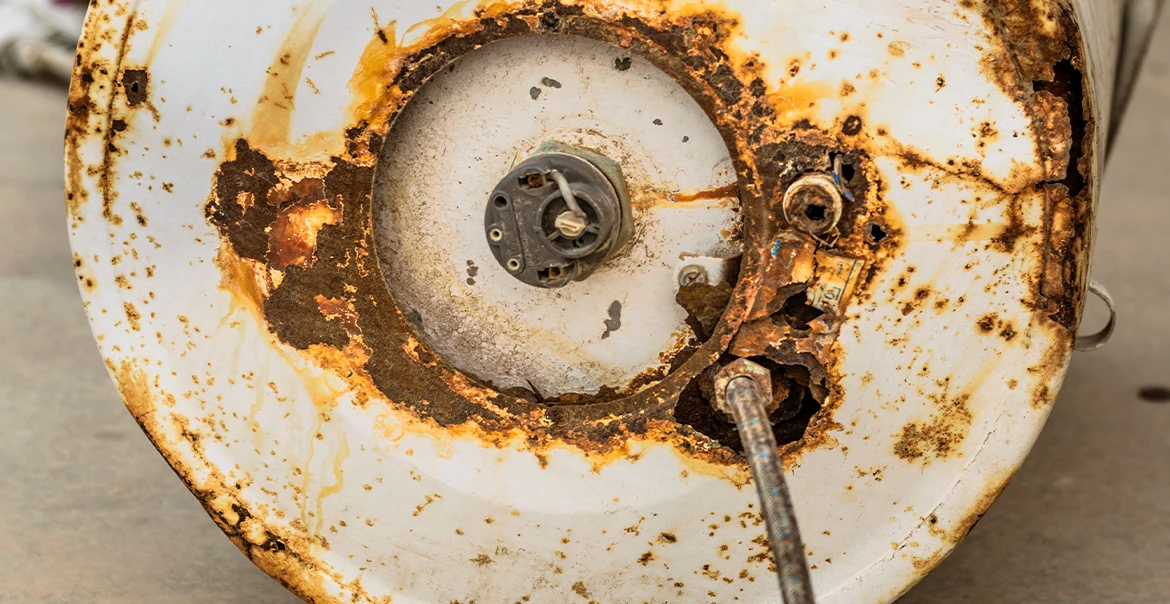
When you spot rust on or in your water heater, it's normal to worry about what this means for your home's comfort and safety. Understanding what causes it, what it means, and how to fix it helps you make smart decisions about maintenance and replacement.
What Causes Rust in Hot Water Heaters?
Water heater rust happens through oxidation: when iron-based materials come into contact with water and air over time. The iron in your water heater's steel tank reacts with oxygen in the water, forming iron oxide (rust). This process is relentless and irreversible once it starts, which is why prevention matters so much. Even a tiny crack in your tank's protective lining can expose bare metal and trigger rust formation that spreads beneath the surface.
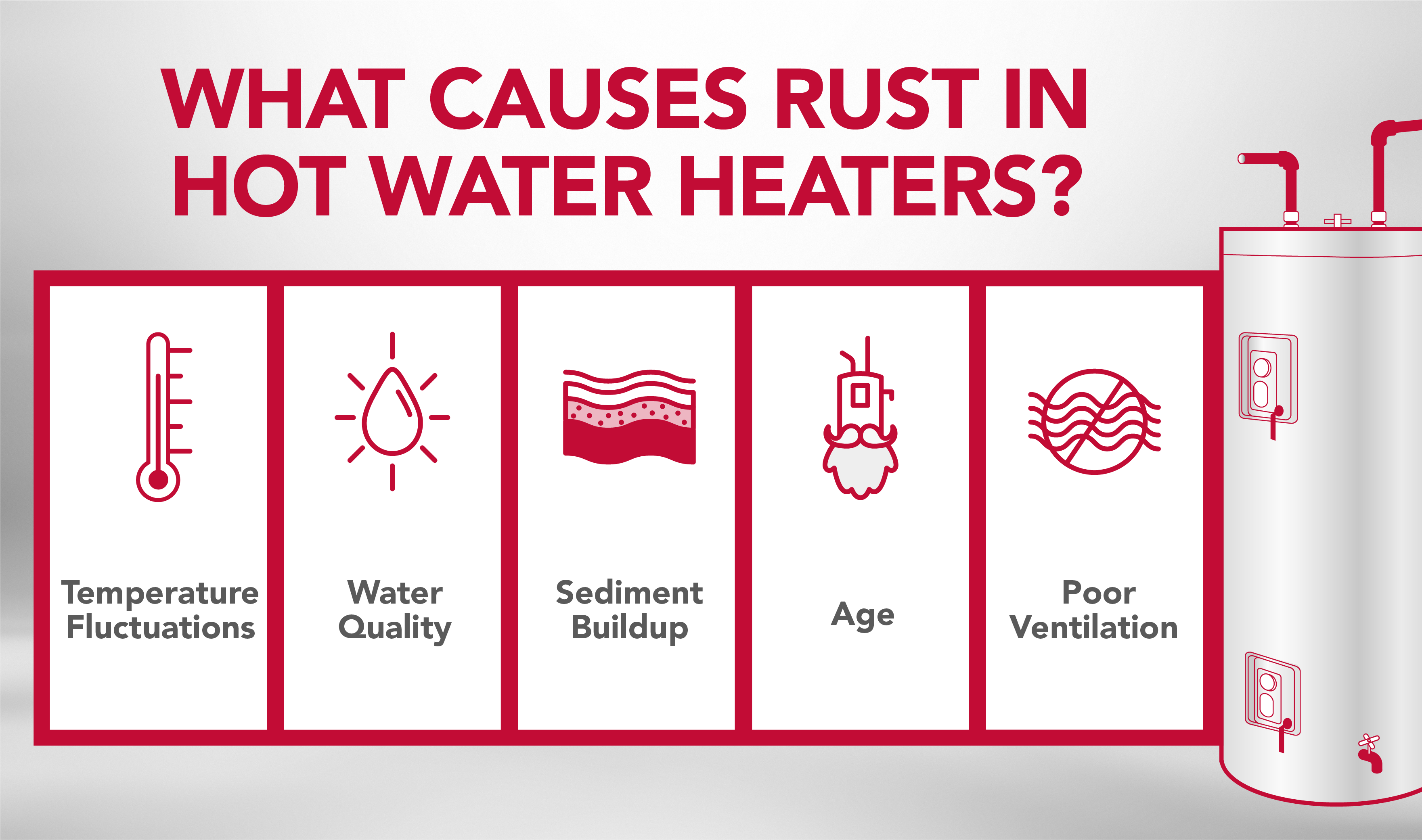
- Temperature Fluctuations
As your water heater heats up and cools down, metal parts expand and contract. This creates tiny stress points where moisture can penetrate protective coatings. Over time, these weak spots become prime locations for rust to develop.
- Water Quality
Hard water with high mineral levels, such as calcium and magnesium, creates deposits that trap moisture on metal surfaces. Water with high acidity or dissolved oxygen speeds up corrosion even more. According to a 2025 American Home Comfort Study, 19% of homeowners replace their water heaters due to breakdowns that couldn't be repaired, and rust-related failures are a major reason why.
- Sediment Buildup
As minerals settle at the bottom of your tank, they create a layer that traps heat and moisture against the metal, wearing down protective linings and creating perfect conditions for rust and corrosion.
- Age
Most conventional tank-style water heaters last 8-12 years. As protective measures like anode rods wear out, your tank becomes more vulnerable to rust. The anode rod, often called a "sacrificial rod,” is designed to corrode instead of your tank. But once it's used up, rust can quickly spread throughout the system.
- Poor Ventilation
Humid environments, especially in basements or utility rooms without good air circulation, keep moisture levels high and promote corrosion.
Signs of Rust in Your Water Heater
Catching rust early can prevent bigger problems and potentially extend your system's life. Visual inspection is your first defense.
- Discolored water coming from your taps is often the clearest sign of internal tank corrosion. This rusty or brownish water usually appears first in hot water and may come with a metallic taste or smell. The rust particles in your water mean the tank's interior protective lining has been damaged.
- External rust typically shows up as reddish-brown discoloration on the tank surface, connections, or surrounding pipes. This surface rust may start as small spots, but can spread quickly if ignored. Pay close attention to the areas around the temperature and pressure relief valve, the inlet and outlet connections, and the bottom of the tank, where sediment and moisture collect.
- Changes in water temperature and pressure can signal trouble. Reduced hot water capacity or inconsistent temperatures may mean rust and sediment buildup is affecting your heater's efficiency. When corrosion products accumulate inside the tank, they reduce the available space for heated water and impede proper heat transfer.
- Strange noises from your water heater can also point to rust-related issues. As rust particles and sediment accumulate at the bottom of your tank, they can cause popping, crackling, or rumbling during heating cycles. These noises happen when water gets trapped beneath sediment layers and turns to steam.
Is Rusty Water Safe to Use?
If you've turned on your tap and seen brownish water flowing out, you're probably wondering whether it's safe for you and your family. The answer isn't black and white; it depends on the concentration of rust and how you plan to use the water.
- Small traces of iron oxide (the technical term for rust) won't poison you, but that doesn't mean you should ignore discolored water. Drinking rusty water regularly can upset your stomach, especially if you're prone to digestive sensitivity. Kids and older adults are more vulnerable to these effects, and anyone with a compromised immune system should avoid drinking rusty water entirely.
- When bathing or showering, rusty water can cause problems. The iron particles can leave your skin feeling dry and irritated, which is especially uncomfortable if you already have eczema or sensitive skin. You might notice your hair taking on an orange tint if you have lighter-colored hair, or a lingering metallic smell that's tough to wash away. Rust can also clog your pores, leading to breakouts or skin irritation.
- Beyond your body, think about your home. Rusty water wreaks havoc on everything it touches. Those stubborn orange and brown stains that appear in your sinks, tubs, and toilets? That's rust doing its damage. Your washing machine might leave rust marks on your clothes, and your dishwasher could start leaving residue on your dishes. Over time, the iron particles work their way into the internal mechanisms of these appliances, wearing down seals, clogging valves, and shortening their lifespan.
How to Address a Rusty Water Heater?
Once you've spotted rust, the clock starts ticking. Your next move depends on where the rust is, how widespread it's become, and whether it's just cosmetic or a sign of more serious damage.
- Tackling surface rust early can save you from bigger headaches down the road. If you notice rust spots on pipes, connections, or the outside of your tank, you might be able to handle it yourself. Cut the power, wait for everything to cool, and grab a wire brush or sandpaper. Scrub away the loose rust until you're down to clean metal, then wipe everything down and seal it with a rust-inhibiting primer and heat-resistant paint designed for water heaters. This won't fix internal problems, but it can stop external rust from spreading.
- Your tank needs a good flush at least once a year. Think of it like changing the oil in your car. Sediment and rust particles settle to the bottom, creating a breeding ground for further corrosion. Draining a few gallons until the water runs clear removes buildup and keeps your system running smoothly. It's one of those simple tasks that makes a real difference in how long your water heater lasts.
- Your water heater has a built-in hero called an anode rod. This metal rod is designed to corrode so your tank doesn't have to, but once it's eaten away (usually after 3-5 years), your tank is defenseless. Having a technician check and replace this rod is one of the smartest investments you can make. It's not expensive, but it can add years to your water heater's life.
- Sometimes rust wins, and that's okay. If your tank is actively leaking, covered in corrosion, or still producing rusty water even after you've flushed it, replacement is the safest option. According to the 2025 American Home Comfort Study, only 16% of homeowners choose to replace aging equipment before it fails completely, a smart move that helps prevent emergencies and water damage.
- Don't try to diagnose everything yourself. A qualified technician brings tools and expertise you don't have. They can assess how deep the corrosion goes, test your water quality to identify the cause of the problem, and give you honest recommendations on whether repair or replacement makes more sense for your situation.
If rust keeps coming back no matter what you do, your water quality might be the real culprit. Upgrading to a water heater with better corrosion resistance, or installing a water treatment system that addresses mineral content and pH levels, can solve the problem at its source. Modern systems come with advanced protective coatings and materials that stand up to harsh water conditions far better than older models.
Preventing Rust in Your Water Heater
Stopping rust before it starts is always cheaper than dealing with the aftermath. A few proactive habits can add years to your water heater and keep your water clean and clear.
- Schedule an annual checkup with a professional. This isn't just about peace of mind; it's about catching problems while they're still small. During these visits, technicians inspect your anode rod, look for weak spots in connections, test your water quality, and fine-tune your system. What might cost you $150 now could save you $1,500 in emergency repairs later.
- Give your water heater room to breathe. If it's tucked away in a damp basement or cramped utility closet with poor airflow, you're creating the perfect environment for rust. Humidity clings to metal surfaces and speeds up corrosion. Make sure air can circulate freely around your unit, and fix any leaks or drainage issues that keep the area moist.
- Don't crank up the temperature. Running your water heater above the manufacturer's recommended setting (usually around 125°F) actually speeds up the chemical reactions that cause rust. Stick to the recommended temperature; it's hot enough for comfort and safety while protecting your system from unnecessary wear.
- Make flushing your tank a yearly ritual, not something you'll "get around to eventually." Sediment doesn't just sit there harmlessly; it traps moisture against the metal, creating corrosion hotspots. Drain a few gallons until the water runs clear, and you'll remove the particles that are slowly eating away at your tank. While you're at it, keep an eye out for small leaks, worn-out gaskets, or strange sounds. These early warning signs are easy to fix now, but expensive to ignore.
- Think ahead if your water heater is getting up there in years. Waiting until it fails means dealing with cold showers, potential water damage, and rushed decisions. Newer models are built with better materials that resist corrosion, and they're far more efficient than what you're probably running now. When choosing a replacement, consider your household's hot water needs, your water's hardness, and which features matter most to you. The right system, properly sized and installed, can serve you reliably for over a decade.
Don’t Let Rust Wreak Havoc
Rust doesn't have to mean disaster. Catch it early, understand what you're dealing with, and take action; that's the formula for keeping your water heater running safely and efficiently. Whether you're scrubbing away a few surface spots or facing a full system replacement, the key is to make informed decisions rather than reactive ones.
If you're seeing rust in or around your water heater right now, don't put it on your "someday" list. A qualified Lennox professional can assess what's really going on, test your water quality, and give you straight answers about whether you need a simple fix or a new system. The peace of mind that comes from clean, safe water and a reliable water heater? That's worth the call.
We’re here to help make home comfort solutions a little clearer and a lot less stressful.
No Worries. It’s a Lennox.™