
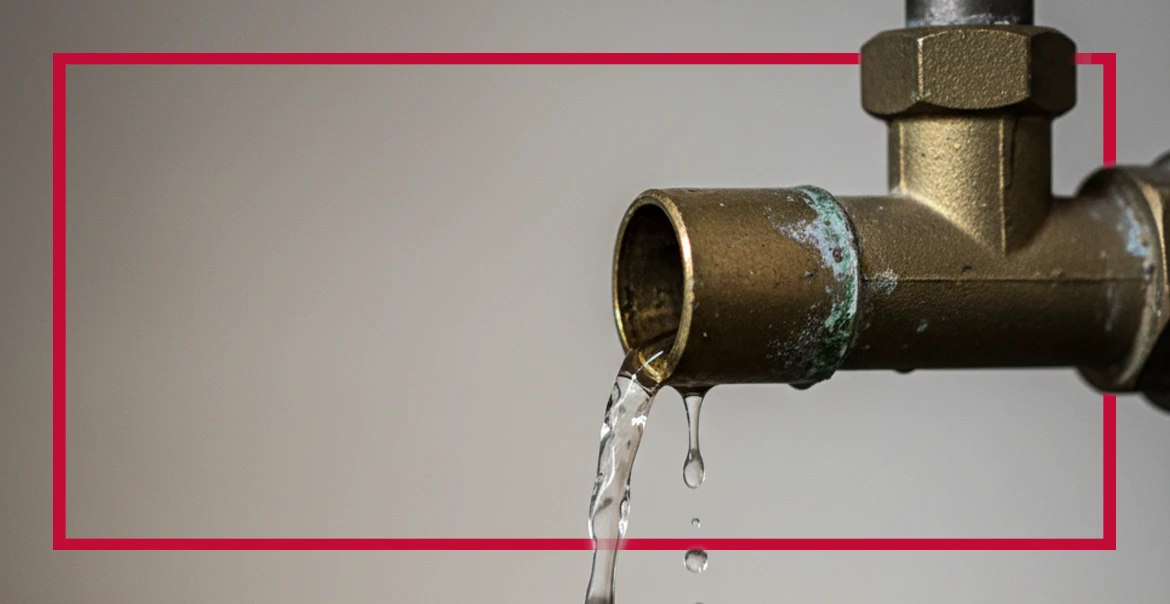
Hot Water Heater Relief Valve Leaking
A small puddle near your water heater or a steady drip from an unfamiliar valve can send any homeowner guessing what’s wrong. If that valve happens to be your hot water heater relief valve, knowing what you’re looking at makes all the difference. Staying on top of your water heater's condition is one of the simplest ways to avoid expensive repairs and keep your home protected from water damage over the long haul.
Understanding the Relief Valve
At the heart of your water heater's safety system sits the temperature and pressure relief valve, commonly called the T&P valve. Its job is straightforward: when pressure or temperature inside the tank climbs to unsafe levels, the valve opens and releases water to restore the balance. Without it, a tank under excessive pressure would have no outlet, and the consequences could be severe.
Here is where it gets nuanced. A relief valve that is releasing water is not automatically broken. It may be doing exactly what it was built to do. But if it is leaking consistently, that pattern points to something that needs a closer look. The T&P valve is engineered to open at around 150 psi and approximately 210°F. Anything pushing the system past those thresholds is worth investigating, whether the trigger is a temperature spike, a pressure surge, or a component that is no longer functioning correctly.
Why It Is a Critical Safety Component on Water Heaters
When pressure inside the tank climbs beyond safe thresholds, the T&P valve opens automatically to discharge water and relieve that pressure before it can cause structural damage to the tank. Think of it as your water heater's last line of defense. Without it, a tank operating under excessive pressure could crack, rupture, or in extreme cases, fail catastrophically. The valve essentially absorbs the risk, so your tank doesn’t have to.
Beyond pressure management, the T&P valve also responds to temperature spikes. If the water in the tank reaches dangerously high levels, the valve opens to release hot water and bring the temperature back into a safe range. This dual function, monitoring both temperature and pressure simultaneously, makes it one of the most important safety components on any water heater. A malfunctioning valve puts both your equipment and your household at risk.
Is a Leaking Relief Valve Normal?
The Difference Between Brief Discharge and Continuous Leaking
Not every drip from a relief valve signals a serious problem. During the water heater's heating cycle, a small amount of water may discharge as pressure temporarily rises. This brief, occasional dripping can be a normal part of how the system manages pressure fluctuations. However, continuous leaking is a different story entirely. Steady or persistent water flow from the relief valve points to an underlying issue that needs attention, whether that is excessive pressure, a faulty valve, or a temperature setting that is too high.
Situations Where Occasional Dripping May Occur
Occasional dripping is most common in closed plumbing systems where there is no expansion tank installed. As water heats up and expands, it has nowhere to go, so pressure rises slightly, and the T&P valve releases a small amount of water to compensate. This is the valve doing exactly what it was designed to do. It can also occur after a period of high hot water demand when the heater is working harder than usual to recover.
When Leaking Indicates an Underlying System Issue
Persistent leakage is a clear signal that something is off. It may stem from high water pressure caused by an excessively high temperature setting or a faulty thermostat. It is advisable to keep your tank's water temperature no higher than 125°F to ensure efficiency, safety, and valve longevity. If the valve continues to leak after you have confirmed the temperature setting is correct, the issue likely runs deeper and warrants a professional inspection.
Signs the Relief Valve Needs Attention or Replacement
Not every drip demands an emergency call, but certain signs make it clear that the relief valve needs more than a visual check. Watch for these indicators:
- Continuous dripping or steady water flow that persists outside of normal heating cycles
- Water collecting near the discharge pipe, pointing to a valve that is releasing more than it should
- Repeated pressure releases, which suggest internal pressure is regularly hitting unsafe levels
- A valve that will not reseat properly, staying open or continuing to drip after pressure has normalized
- Visible corrosion or physical damage on the valve body that may be preventing a clean seal
When any of these signs show up alongside unusual sounds from the tank or inconsistent pressure gauge readings, replacement is almost always the more reliable fix compared to cleaning or adjusting the existing valve.
Common Causes of a Leaking Relief Valve
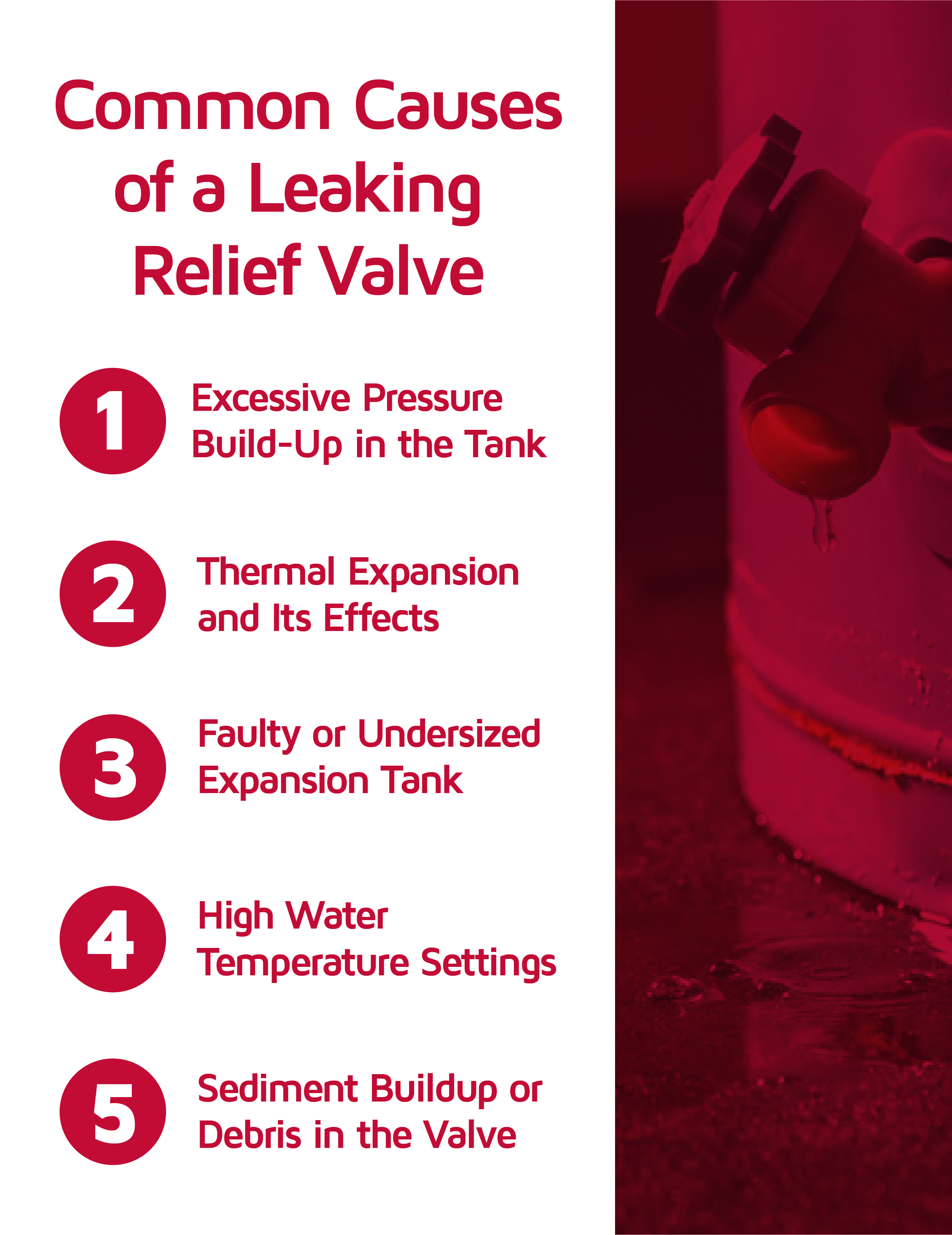
Excessive Pressure Build-Up in the Tank
The most common cause of a leaky relief valve is excessive pressure from high temperatures, often due to a malfunctioning thermostat. When the thermostat fails to regulate water temperature accurately, the water inside the tank can overheat, causing pressure to spike and the valve to open. Temperature control is key to avoiding this scenario entirely.
Thermal Expansion and Its Effects
When water heats up, it expands. In a closed plumbing system, that expanded volume has nowhere to go, so it pushes against the tank walls, raising internal pressure. If the pressure climbs high enough, the T&P valve opens to release the excess. Installing an expansion tank is one of the most effective ways to absorb that extra water volume and relieve pressure on the relief valve before it becomes a recurring problem.
Faulty or Undersized Expansion Tank
Even if an expansion tank is already installed, it may be undersized for your system or have worn out over time. A waterlogged or undersized expansion tank cannot absorb enough volume to keep pressure in check, which means the T&P valve ends up doing the heavy lifting repeatedly. Over time, this wears the valve down and can cause it to leak even when pressure levels are not high enough to be critical.
High Water Temperature Settings
A water heater set above the recommended threshold is one of the most straightforward causes of relief valve leaking. When the thermostat is set too high, the water in the tank heats beyond the system's safe limit, triggering the T&P valve. Keeping your temperature setting at or below 120°F is a simple, proactive step that protects both the valve and the tank.
Sediment Buildup or Debris in the Valve
Over time, mineral deposits and sediment can accumulate within the valve, preventing it from seating properly after opening. When debris becomes lodged in the valve seat, water continues to drip even after pressure has returned to normal. Regular flushing of your water heater and periodic inspection of the valve can help prevent sediment from compromising its function. Select Lennox water heater models also include a SediMotion™ anti-sedimentation system to protect against sediment buildup.
Safety Risks of Ignoring a Leaking Relief Valve
Letting a leaking relief valve go unchecked is not just an inconvenience; it puts your home and your household at real risk. Here is what can happen when the problem is left unaddressed:
- Tank rupture from unchecked pressure, which can cause serious structural damage to your home
- Water damage to floors, walls, and nearby belongings from a valve that continues to discharge
- A drop in water heater efficiency, as a valve cycling too often adds strain to the entire system
- Serious safety hazards, including scalding water discharge and the possibility of complete tank failure
The longer a faulty relief valve goes without attention, the higher the stakes become. Prompt action protects your equipment, your home, and everyone in it.
Steps to Take If Your Relief Valve Is Leaking
Immediate Actions to Prevent Water Damage
As soon as you spot a leak, move quickly:
- Cut power to the unit. For electric water heaters, flip the dedicated breaker in your electrical panel. For gas-powered units, locate and shut off the gas supply valve feeding the heater.
- Confirm your temperature setting. Pull up the thermostat on your water heater and make sure it is not set above 120°F. A tank that is running too hot is one of the most direct causes of relief valve activation.
How to Inspect the Relief Valve for Issues
Once the system is safely powered down, take a closer look at the valve itself:
- Inspect for Damage: Look for external signs of corrosion, cracks, or mineral buildup around the valve body. Tightening connections or cleaning the valve may resolve minor issues, but if the valve is visibly damaged or continues to leak after cleaning, replacement is the right call.
- Install an Expansion Tank: If thermal expansion is the root cause, integrating an expansion tank into your system will absorb excess water volume and take the pressure off the relief valve.
When to Call a Professional for Assistance
If the leak persists after you’ve worked through the steps above, bring in a qualified technician. A professional can evaluate pressure and temperature calibration, inspect the expansion tank, and diagnose any system-level issues that are not visible from the outside. Some problems simply require the right tools and training to fix correctly.
Preventing Future Relief Valve Leaks
Staying ahead of relief valve issues is far easier than dealing with the aftermath of a failure. These proactive habits make a real difference:
- Routine professional maintenance: Annual professional check-ups are the cornerstone of long-term water heater health. A technician can catch early warning signs before they escalate into costly repairs. Explore energy-efficient HVAC systems to keep your home running at its best.
- Monitoring water pressure: Keep an eye on your home's water pressure. Consistently high incoming pressure puts ongoing stress on the T&P valve and the tank itself.
- Maintaining proper temperature settings: Periodic inspections should confirm that temperature settings remain within the safe range, and check for lime and sediment accumulation that can affect both the valve and the tank's overall efficiency.
- Replacing aging components proactively: Relief valves do not last forever. If your valve is several years old or has been tested and cycled frequently, replacing it before it fails is a smart, low-cost move that protects a much larger investment.
The Bottom Line
Understanding how your water heater's relief valve works, and what it is telling you when it leaks, puts you in a far better position to protect your home and avoid costly repairs. Recognizing the difference between normal pressure discharge and a genuine system issue is the first step. From there, acting quickly, whether that means adjusting temperature settings, installing an expansion tank, or calling in a professional, keeps small problems from becoming big ones. Timely maintenance and inspections from a Lennox dealer are the foundation of a water heater that runs safely and efficiently for years to come.
We’re here to help make home comfort solutions a little clearer and a lot less stressful.
No Worries. It’s a Lennox.™