
When a heat pump breaks down, homeowners often face a difficult decision. Do you continue repairing an aging system, or does it make more sense to replace it entirely? Heat pump replacement is not simply a matter of swapping equipment. It is a long-term decision that affects comfort, energy efficiency, reliability, and household expenses for years to come.
Today’s heat pumps are significantly more advanced than systems installed even a decade ago. Improvements in cold-weather performance, efficiency ratings, controls, and diagnostics have changed what homeowners can reasonably expect from a replacement. Understanding how heat pumps work, when replacement makes sense, what drives replacement cost, and what the process involves allows homeowners to move forward with clarity rather than urgency.
Understanding Heat Pumps: The Basics
A heat pump is an all-in-one heating and cooling system that transfers heat instead of generating it. In cooling mode, it works much like an air conditioner, removing heat from inside the home and releasing it outdoors. In heating mode, the system reverses the cycle, pulling heat from outdoor air and moving it indoors.
This ability to move heat rather than create it is what makes heat pumps so efficient. Under the right conditions, a heat pump can deliver, on average, two to three units of heating or cooling energy for every unit of electricity it uses. Over time, that efficiency can translate into lower energy bills and more consistent comfort.
Types of Heat Pumps and Their Applications
Several heat pump designs are commonly used in residential settings:
- Air-source heat pumps, the most common type, extract heat from outdoor air year-round. Modern designs can operate effectively even in colder climates.
- Ductless or mini-split heat pumps, while still air-source heat pumps, deliver targeted heating and cooling without ductwork. These systems are often used for additions, renovations, or homes with uneven comfort.
- Ground-source or geothermal heat pumps exchange heat with the ground rather than outdoor air. They offer excellent efficiency but require the right amount of outdoor space, extensive installation, and a higher upfront investment.
When replacing a heat pump, homeowners typically choose a system type that matches their existing layout, climate, and comfort goals.
Capacity and Operation Styles
Heat pumps are also categorized by how they operate. Single-stage systems run at full output whenever they are on. Two-stage systems can operate at 65-70% of full capacity during milder conditions. Variable-capacity systems adjust output continuously, running at lower speeds most of the time. This allows for steadier temperatures, quieter operation, and improved efficiency.
Signs It May Be Time for Heat Pump Replacement
There are a few key indicators that you may be ready to consider a heat pump replacement.
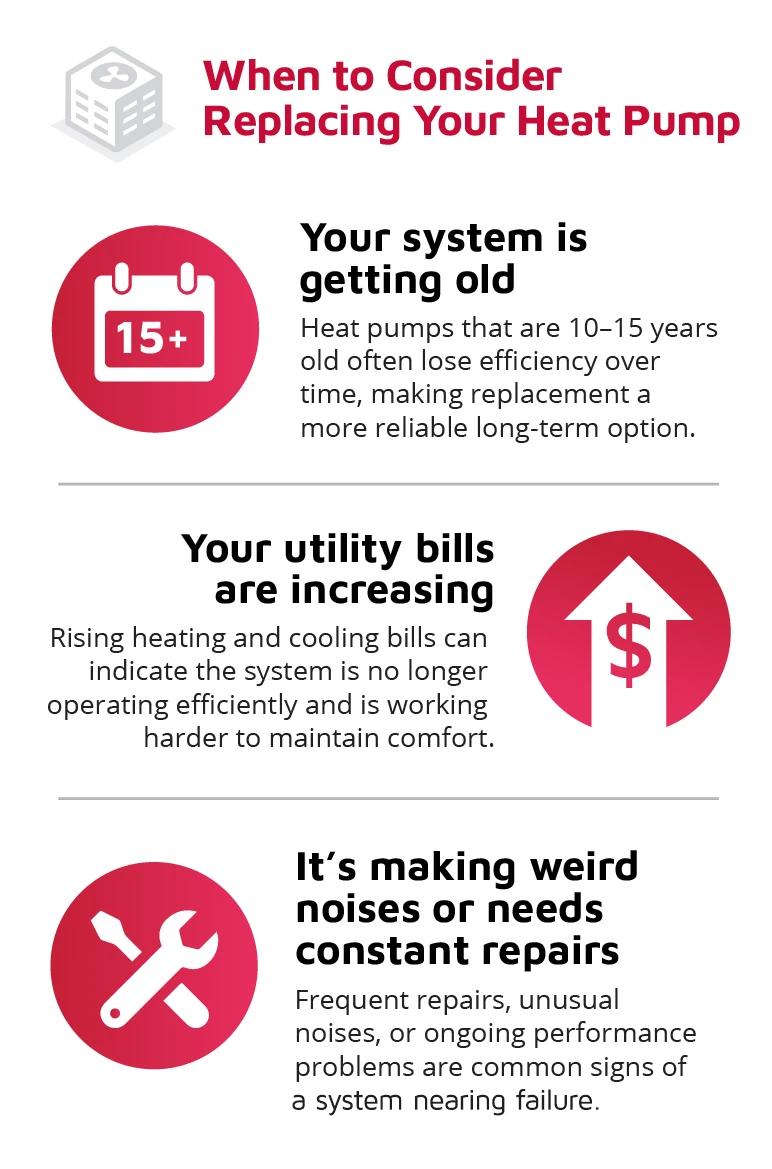
- System Age: Most residential heat pumps have a normal service life of about 10 to 15 years. Some systems last longer with routine maintenance, but performance typically declines as components wear.
- Frequent Repairs: One of the clearest indicators that replacement may be approaching is frequent repair needs. Occasional service calls are normal. Repeated breakdowns, especially involving major components like compressors or control boards, often signal that the system is nearing the end of its useful life.
- Rising Energy Bills: An uptick in your electric bill can also point to declining efficiency. As internal parts wear and refrigerant systems age, heat pumps must work harder to deliver the same comfort. If energy use climbs despite similar weather and usage patterns, the system may no longer be operating efficiently.
- Comfort or Performance Issues: These are other common warning signs. Uneven temperatures, difficulty maintaining the thermostat setting, excessive cycling, or poor humidity control often indicate that the heat pump can no longer meet the home’s needs.
Unusual noises, persistent odors, visible corrosion, or refrigerant leaks should never be ignored. These issues may be repairable, but they also suggest broader system deterioration.
Repair or Replace: How Homeowners Weigh the Decision
Choosing between repairing and replacing a heat pump often comes down to cost, reliability, and future expectations. A general rule many homeowners follow is this: when a major repair approaches half the cost of a new system, replacement deserves serious consideration, particularly if the heat pump is already more than a decade old.
Repairs can restore operation, but they do not reset the clock on efficiency or remaining lifespan. An older system may continue to function after repairs, yet still cost more to operate and remain vulnerable to additional failures. In many cases, these systems rely on outdated or phased-out refrigerants, which make leaks and major repairs significantly more expensive and further tips the balance toward replacement.
Heat Pump Replacement Cost: What Drives the Price
Heat pump replacement cost varies widely. The average cost of a heat pump depends on several interacting factors, rather than a single price point.
- Equipment and Efficiency: Higher-efficiency heat pumps generally cost more upfront than basic models. However, they also tend to use less energy over time. Many homeowners evaluate replacement cost by balancing initial investment against expected operating savings.
- System Size and Design: Heat pumps are sized based on a home’s heating and cooling load. Residential systems typically range from 1.5 to 5 tons. Proper sizing requires professional calculations that account for square footage, insulation levels, window efficiency, and local climate. An oversized system costs more and may cycle inefficiently, while an undersized system struggles to maintain comfort.
- Installation Complexity: Replacing a heat pump using existing ductwork and electrical connections is often more straightforward than installations that require upgrades. Modifying ductwork, adding electrical capacity, replacing refrigerant lines, or updating controls all add to total cost.
- Location and Local Requirements: Regional labor rates, permitting requirements, and climate conditions influence pricing. Homes in extreme climates may require more robust system specifications, which can affect equipment and installation costs.
- Brand Selection: The model and brand you choose also impacts both initial costs and long-term value. Premium brands like Lennox offer advanced heat pumps, superior warranties, and proven reliability but command higher prices. The investment often pays dividends through improved efficiency, longer equipment life, and better comfort control.
- Additional Equipment: Depending on your installation, you may need to figure in the cost of any additional components such as thermostats and zoning systems, air quality equipment, and ductwork. The impact of these components on your installation cost can vary greatly depending on your choices.
Incentives, Rebates, and Financing Considerations
State programs and local utility rebates may reduce the cost of installing a heat pump. Many incentives are tied to efficiency ratings, rewarding homeowners who choose higher-efficiency systems and making premium equipment more cost-effective when incentives are factored into the total investment. Incentive and rebate requirements vary by location and program, and some incentives require specific documentation or pre-approval, so it is worth researching options early in the process.
Choosing the Right Heat Pump for Your Home
Selecting a replacement heat pump involves more than matching the old system’s size. Climate, comfort priorities, and household usage patterns all matter.
In colder regions, modern cold-climate air-source heat pumps are designed to maintain heating performance at much lower outdoor temperatures than older systems. In milder climates, efficiency and humidity control may be higher priorities.
Advanced controls and communication features can improve performance monitoring and system optimization. Some homeowners also consider dual-fuel configurations that combine a heat pump with an existing gas furnace, allowing the system to switch energy sources based on outdoor conditions and operating costs.
Understanding efficiency ratings also helps guide decisions. SEER2 reflects cooling efficiency, while HSPF2 reflects heating efficiency. Higher numbers indicate better performance but typically come with higher upfront cost.
What to Expect & Why Professional Installation Matters
Proper installation is critical. Incorrect airflow, wiring issues, or improper refrigerant charge can reduce efficiency and shorten system life.
Replacing a heat pump by a qualified technician typically takes one to two days, depending on the home. Installation includes:
- Removal of the old system
- Installation of all new indoor and outdoor components
- Connecting refrigerant and electrical lines
- Testing your new system’s operation
- Inspecting your existing ductwork to ensure it can support the new system efficiently
Professional installation not only prevents safety and efficiency issues, it also helps protect manufacturer warranties and ensures the system meets local building codes.
Life After Replacement: Maintenance Still Matters
Replacing a heat pump doesn’t eliminate the need for maintenance. Regular care will protect your investment and help extend your system’s life.
- Replace Filters: One of the simplest tasks homeowners can manage is heat pump air filter replacement. Filters should be checked monthly and replaced when dirty, often every one to three months depending on conditions. Clean filters support airflow and reduce strain on internal components.
- Remove Debris: Outdoor units should remain clear of leaves, grass, and debris, with sufficient clearance for airflow.
- Check Condensate Drains: Indoor condensate drains should be checked periodically to prevent clogs and moisture issues.
- Professional Maintenance: System tune-ups are typically recommended twice a year, once before the cooling season and once before the heating season. These visits help identify small issues early and keep the system operating efficiently.
Heat pump replacement is a major decision, but it can also be an opportunity to improve comfort, efficiency, and reliability throughout the home. By understanding system lifespan, recognizing warning signs, evaluating replacement cost factors, and knowing what to expect during installation, homeowners are better equipped to make thoughtful choices rather than reactive ones. With the right planning and proper care, a new heat pump can provide dependable comfort and energy savings well into the future.
Reach out to your local Lennox dealer today if you suspect your heat pump may be having issues; they’ll help determine if you need a replacement and if so make sure your product selection and installation goes smoothly.
We’re here to help make home comfort solutions a little clearer and a lot less stressful.
No Worries. It’s a Lennox.™